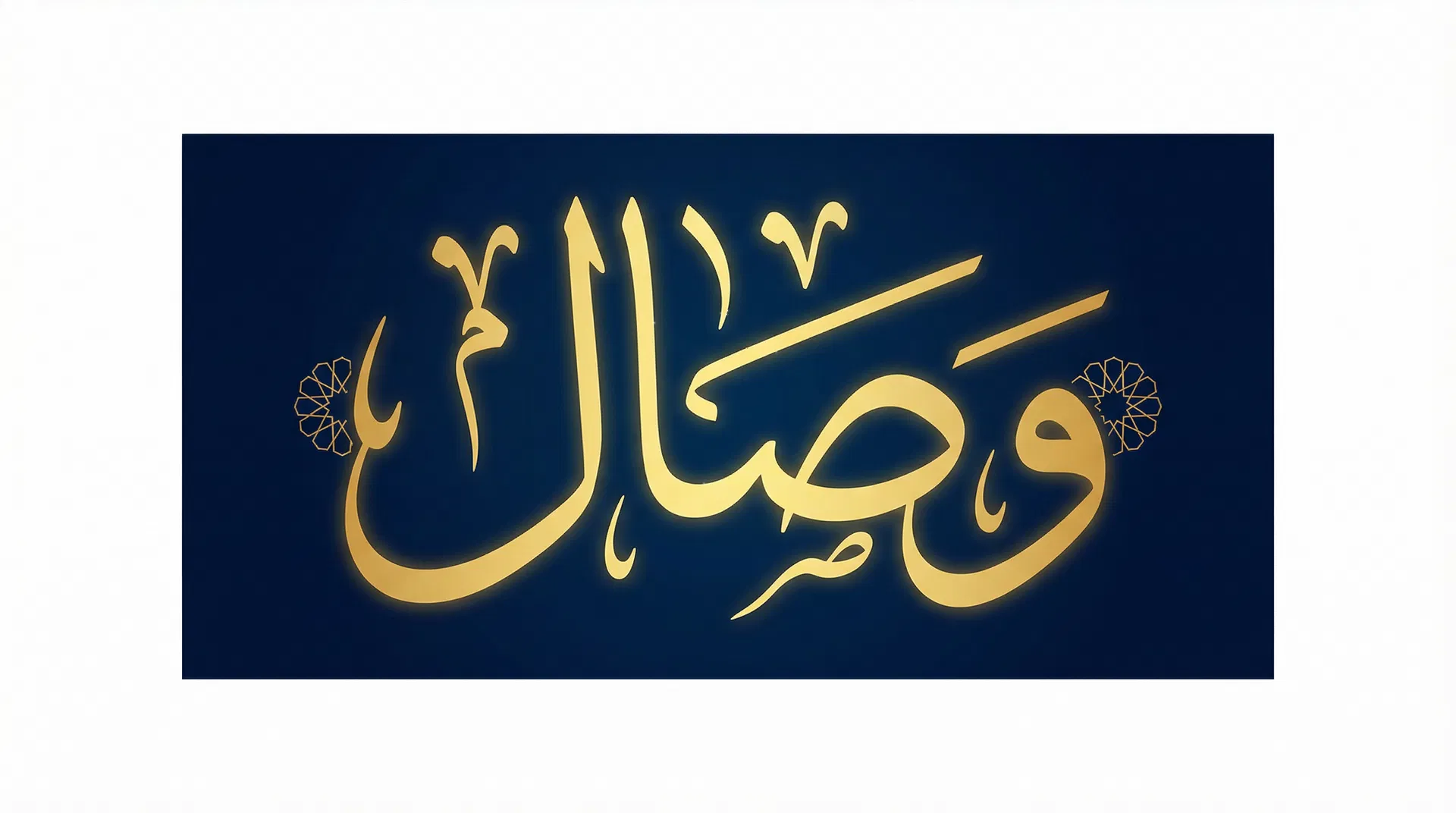

Night 7
20 views
The Cedar Exile
Night 7 — Tarek
⸻
Some men do not break all at once. They break slowly, day after day, until one morning they wake and realize that what they were is no longer there.
It was Hamza who asked the question. He had carried it in his eyes for two days — that restrained curiosity, that need to understand the man who walked at the front, who slept with one eye open, who had placed his body between a stranger's weapon and Youssef with the calm ease of someone for whom violence is not an exception but one language among many.
They had been walking since dawn along a ridge path, the Atlas Mountains spread to their right like a cold green sea. Fatima at the rear, Hamza in the middle, Youssef and Tarek at the front. The question came between two breaths, as naturally as if Hamza were asking for directions.
— Tarek. What kind of soldier were you?
A long silence. Then Tarek said, without turning:
— All kinds. And none worth telling.
— I would still like to know, Hamza said.
Tarek kept walking for a hundred paces. Then he said, still without turning, in the voice of a man telling a story he had long refused to tell and had finally decided that refusal cost more than words:
— Sit with me tonight. I will tell you.
— ✦ —
That evening they halted in the ruins of an abandoned caravanserai — four walls still partly standing, a roof that no longer existed, but protection enough against the northern wind descending from the heights of the Atlas Mountains with its January teeth. A fire was lit. Little was eaten. And when Hamza turned his eyes on Tarek with that silent expectation, the man cleared his throat and began.
— My name is Tarek ibn Moussa. I was born in Ronda — not Granada, Ronda, in the mountains to the south. Amazigh family for seven generations in Andalusia. My great-grandfather had fought to defend the taifa of Granada when the Christian kingdoms were beginning to gnaw at it. My grandfather had served Sultan Abu Hassan. My father had served Boabdil — the last sultan. And I...
He stopped. The fire crackled. Somewhere in the ruins, an owl.
— I served both sides.
No one said anything. Tarek looked into the fire.
— At twenty, I fought for the Sultan of Granada. I defended the walls, the mountain passes, the supply routes. I was good at it. Perhaps too good. At twenty-five, the Castilians captured me in an ambush in the Sierra Nevada. They gave me a choice: prison, or serve as a scout for their forces. Knowing the terrain of Granada the way I knew it — every path, every spring, every place where you can hide a hundred men or ambush five hundred — that was worth gold to them.
Hamza had stopped breathing. Fatima watched the fire. Youssef watched Tarek — he had sensed it from the beginning, that something too precise in how he moved, calculated, read a situation. It was not merely military experience. It was knowledge of both sides.
— I said yes. Because I was afraid. Because I had a wife in Ronda and a newborn son. Because death is simple and prison is long and I chose what seemed the middle path. There was no middle path.
— ✦ —
His voice had not changed timbre — it had stayed level, almost clinical, the voice of a man reporting facts about someone else. But his hands, resting on his knees, had tightened almost imperceptibly.
— I guided Castilian columns through passes that only the Amazighs of Ronda knew. Passes my father had shown me. Smuggling routes, shepherd paths, natural tunnels in the limestone rock. Because of me, they outflanked several defenses that Granada believed impregnable. I don't know how many men died because of that information. I don't want to know. I spent ten years not wanting to know.
— And your wife? Your family? Fatima asked softly.
Tarek did not reply immediately. The fire dipped slightly — someone should have added wood; no one did.
— Ronda fell in 1485. Seven years before Granada. When the Castilians took the city, they honored their agreement with me — they let me leave with my family. But my wife would no longer look at me. My son was six and did not understand why neighbors spat in the street when I passed. We left Ronda. We went to Granada. And in Granada, I tried to become someone who had not done what I had done.
— Did it work? Hamza asked.
— No. Nothing works for that. You can change what you do. You cannot change what you have done.
He picked up a branch and laid it on the fire. The flames rose for a moment.
— My wife died in Granada, two years before the fall. A fever. My son — he was fifteen when the city fell. He left with the first boats, toward Oran I think. I don't know if he is alive.
— ✦ —
— Then why are you here? Youssef asked. Why did you follow me from the Road of Tears?
Tarek looked at him for the first time since he had begun speaking. His gaze held something unusually direct — usually his eyes calculated, evaluated, kept moving. Now they were still.
— I knew your father. Not personally — from a distance. In Granada, during the last two years. I would go to the mosque in his quarter sometimes, not really to pray, just to hear the muezzin's voice. Baaddi had a way of singing the call that made even people who were no longer sure they believed in anything stop. I was one of those. I stopped.
He resumed his habitual posture — eyes on the fire, shoulders slightly drawn in, the vigilance returning like a garment put back on.
— On the last morning of Granada, I was in the street when he sang from the minaret for the last time. He knew it — everyone knew it. And his voice that morning was different. Not more beautiful, not louder. Just... true. As if all the human performance, everything we tell ourselves to keep going, had been stripped away, and only the core remained.
Youssef clenched his teeth. He knew that voice. He had heard it that morning too, from the room where Baaddi had locked him for safety. He had listened through the wooden door.
— I have spent my life betraying things, Tarek said. Mountain passes, secret roads, men who trusted me. When I saw Baaddi's son on the Road of Tears, with something hidden under his djellaba and people on his trail — I knew. I knew this was something I would not betray.
— Is that all? Hamza said.
— It is enough. For a man like me, protecting a true thing — it may be the only way to repay a debt that cannot be repaid any other way.
Silence settled over them, soft and heavy at once. The fire crackled. The wind passed over the crumbling walls of the caravanserai.
Youssef thought of what his father had told him, the night he placed the manuscript in his hands. Baaddi had looked at his son for a long time before speaking, and had said: "The people who will help you will not necessarily be those you expected. Recognize them by what they do, not by what they have been."
He had not understood then. Now he did.
— ✦ —
They fell asleep late that night. Confessions had that power — they exhausted as much as they relieved.
It was Tarek who kept the last watch, as always, his back against a section of wall, eyes in the darkness. The moon had risen late and bathed the ruins of the caravanserai in a light that made the stones look like bones.
At some point, Youssef — who was not truly sleeping — heard him murmur something. Too low to make out the words. But the rhythm was recognizable.
It was the call to prayer of Granada. Baaddi's melody. Tarek was singing it under his breath, from memory, alone in the ruins, like a prayer or an act of contrition — it was impossible to say which. Perhaps both.
Youssef closed his eyes and listened. He did not recognize all the notes — Tarek's memory had its own gaps, its own distortions. But the heart of the melody was there, intact, carried by the rough voice of a broken man in the ruins of a vanished world.
The manuscript would not be the only place where Baaddi's voice had survived.
Share this night
Your friends will see the night illustration and a short teaser — then come here to read the full story.